


Some error occured while loading the Quick View. Please close the Quick View and try reloading the page.
At publication date, a free ebook version of this title will be available through Luminos, University of California Press's Open Access publishing program. Visit www.luminosoa.org to learn more.
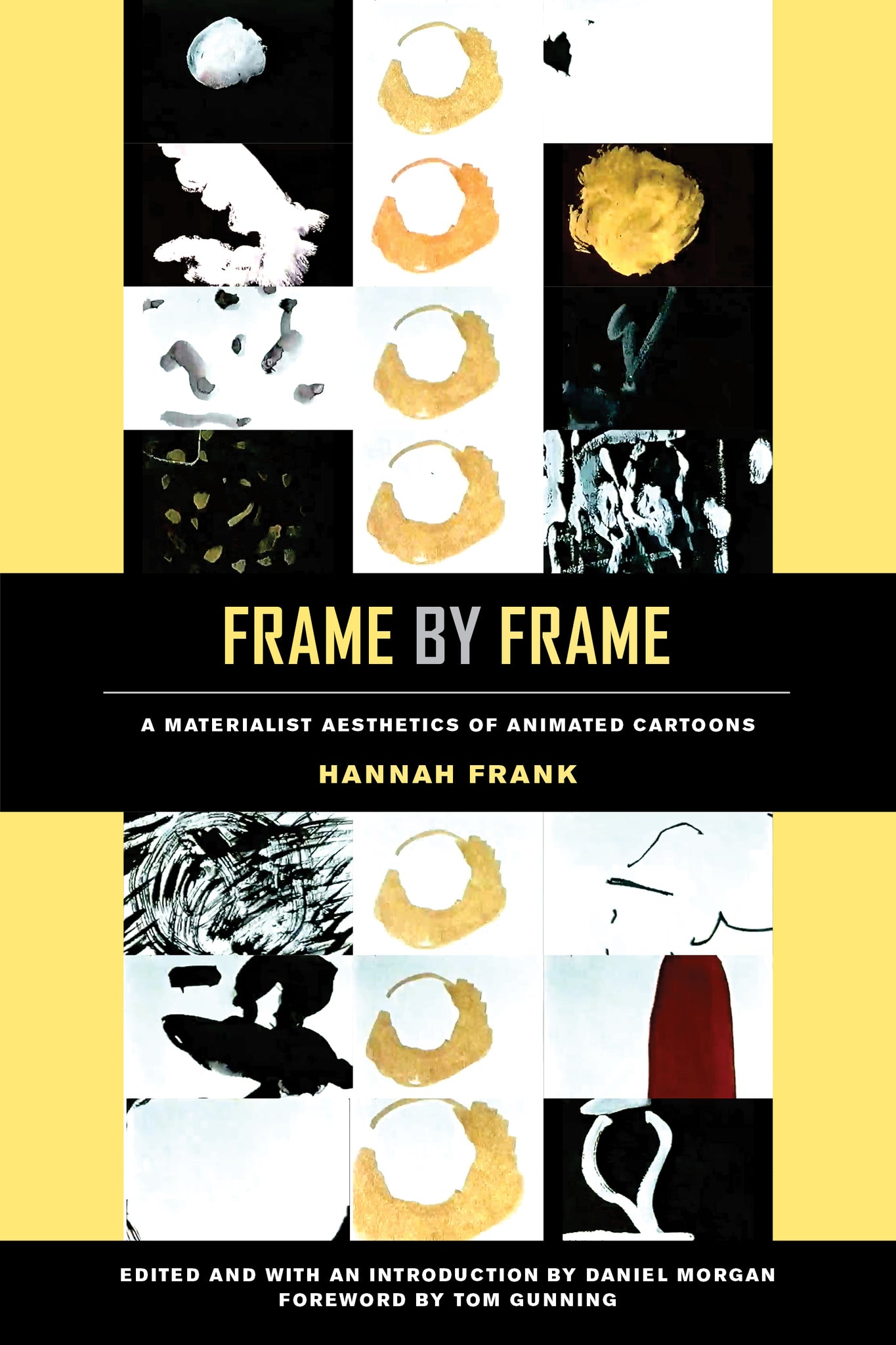
In this beautifully written and deeply researched study, Hannah Frank provides an original way to understand American animated cartoons from the Golden Age of animation (1920–1960). In the pre-digital age of the twentieth century, the making of cartoons was mechanized and standardized: thousands of drawings were inked and painted onto individual transparent celluloid sheets (called “cels”) and then photographed in succession, a labor-intensive process that was divided across scores of artists and technicians. In order to see the art, labor, and technology of cel animation, Frank slows cartoons down to look frame by frame, finding hitherto unseen aspects of the animated image. What emerges is both a methodology and a highly original account of an art formed on the assembly line.
In this beautifully written and deeply researched study, Hannah Frank provides an original way to understand American animated cartoons from the Golden Age of animation (1920–1960). In the pre-digital age of the twentieth century, the making of cartoons was mechanized and standardized: thousands of drawings were inked and painted onto individual transparent celluloid sheets (called “cels”) and then photographed in succession, a labor-intensive process that was divided across scores of artists and technicians. In order to see the art, labor, and technology of cel animation, Frank slows cartoons down to look frame by frame, finding hitherto unseen aspects of the animated image. What emerges is both a methodology and a highly original account of an art formed on the assembly line.

Price: $34.95
Pages: 256
Publisher: University of California Press
Imprint: University of California Press
Publication Date:
07 May 2019
Trim Size: 9.00 X 6.00 in
ISBN: 9780520303621
Format: Paperback
BISACs:
"It's not every day that a posthumously published Ph.D. thesis nudges the world of cinema studies off its axis. All hail Frame by Frame: A Materialist Aesthetics of Animated Cartoons."
Hannah Frank (1984–2017) was Assistant Professor of Film Studies at the University of North Carolina Wilmington. Her work has been published in Critical Quarterly and Animation: An Interdisciplinary Journal, and she contributed a chapter to A World Redrawn: Eisenstein and Brecht in Hollywood.
Daniel Morgan is Associate Professor of Cinema and Media Studies at the University of Chicago and is author of Late Godard and the Possibilities of Cinema.
Daniel Morgan is Associate Professor of Cinema and Media Studies at the University of Chicago and is author of Late Godard and the Possibilities of Cinema.
List of Illustrations
Foreword: Hannah Frank’s Pause by Tom Gunning
Editor’s Introduction by Daniel Morgan
Acknowledgments
Introduction: Looking at Labor
1. Animation and Montage; or, Photographic Records of Documents
2. A View of the World: Toward a Photographic Theory of Cel Animation
3. Pars Pro Toto: Character Animation and the Work of the
Anonymous Artist
4. The Multiplication of Traces: Xerographic Reproduction and
One Hundred and One Dalmatians
Conclusion: The Labor of Looking
Notes
Bibliography
Index
Foreword: Hannah Frank’s Pause by Tom Gunning
Editor’s Introduction by Daniel Morgan
Acknowledgments
Introduction: Looking at Labor
1. Animation and Montage; or, Photographic Records of Documents
2. A View of the World: Toward a Photographic Theory of Cel Animation
3. Pars Pro Toto: Character Animation and the Work of the
Anonymous Artist
4. The Multiplication of Traces: Xerographic Reproduction and
One Hundred and One Dalmatians
Conclusion: The Labor of Looking
Notes
Bibliography
Index